
Life doesn’t happen in a straight line. Does your exercise?
Think about the last time you got out of your car.
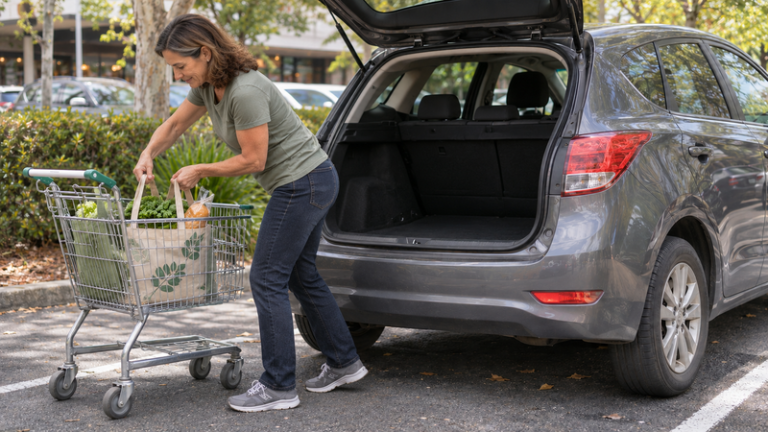
You turned towards the door, moved your legs sideways, leaned forwards and pushed yourself up. Perhaps you then reached back for your bag before stepping around the open door.
One ordinary task. Several different movements.
Our days are full of these combinations. We bend, turn, reach, step sideways and shift our weight, often without giving it much thought.
That raises a useful question: does your exercise give you opportunities to practise moving in different directions?
At Pilates Connection, we consider how the work you do in the studio relates to the life you lead outside it. It’s an important part of our focus on Longevity – Living Better, Longer.
Your body moves in more than one direction
Walking, cycling and many familiar gym exercises involve plenty of forwards-and-backwards movement. These are valuable activities, but everyday life also asks us to move sideways and rotate.
You might step sideways to let someone pass on a narrow footpath, turn to speak to a friend walking beside you, or reach diagonally across a garden bed.
In movement terms, we often describe three main planes:
- Forwards and backwards: Bending and straightening, as you do when sitting down or climbing stairs.
- Side to side: Stepping sideways or reaching out to one side.
- Rotation: Turning through parts of the body, such as looking behind you or reaching across yourself.
Most daily activities combine these directions. Your hips, spine, shoulders and feet work together, while your muscles help you move and maintain control.
The everyday movements worth noticing
Sometimes it’s a small moment that draws your attention to a change.
Getting your coat on feels awkward. You hesitate before stepping around something on the floor. Reaching into the back seat takes more planning than it used to.
These experiences can have different causes. Strength, joint mobility, balance, coordination, pain and confidence may all play a part.
They’re useful things to mention to your instructor. “I’m finding it harder to get out of the car” gives us a practical starting point for understanding what you want your movement programme to support.
You don’t need an ambitious fitness goal. Making a familiar task feel more manageable is a worthwhile goal in itself.
How studio Pilates brings different directions into your session
A tailored Pilates programme can include opportunities to bend, straighten, reach, move sideways and turn, with support and resistance adjusted to the individual.
Depending on your needs, your instructor might choose:
- Side-lying leg work to challenge the muscles around the hips while you practise keeping your pelvis controlled.
- Supported standing exercises to explore weight transfer and balance.
- Gentle rotation exercises to practise turning through an appropriate, comfortable range.
- Arm work with springs to combine reaching with control through the trunk.
- Stepping and split-stance exercises to work on coordinating the legs and maintaining stability.
An exercise doesn’t have to look exactly like gardening or getting out of a car to work on some of the physical abilities those activities require.
The range of equipment in a traditional Pilates studio gives us different ways to approach that work. A reformer, chair, Cadillac or mat exercise may offer a useful starting point, depending on the person.
Individual attention makes the challenge appropriate
Moving in more directions doesn’t mean pushing into bigger movements or choosing increasingly complicated exercises.
For one client, the right challenge may be a small, supported weight shift. For another, it might involve coordinating a reach with a controlled turn.
At Pilates Connection, our private and small group sessions are tailored to individual needs. Your instructor can adjust positioning, spring resistance, support and range of movement, while observing how you respond.
If you have osteoporosis, a recent operation, an injury or another health concern, some movements may need to be modified or avoided. Tell your instructor about your diagnosis and any advice from your treating health professional so your programme can reflect it.
Why this matters for living better, longer
Our longevity focus is closely connected to the activities you want to keep enjoying.
That might mean tending the garden, travelling, playing with grandchildren or feeling confident moving around your neighbourhood.
Those activities call on several abilities at once. Strength matters, alongside balance, mobility and coordination. Physical activity guidelines for older adults recognise the value of combining functional balance and strength work within a varied exercise routine.
Pilates can contribute to that routine, alongside walking or other aerobic activity and appropriately challenging strength exercise.
Practising a variety of suitable movements gives your sessions a purpose that extends beyond the studio: supporting your ability to take part in everyday life.
Tell us what you want to keep doing
At your next session, mention one movement you’ve noticed becoming more difficult, or an activity you’d like to feel more confident doing.
It might be lifting a bag into the car, stepping across uneven ground or turning comfortably to look behind you.
These details help us understand what matters to you and guide the work we do together.
Curious about your balance, posture or mobility? Let’s assess it together.
To find out more about tailored Pilates at our Lane Cove studio, call Liane after 12pm on 0400 012 693, or email info@pilates-connection.com.au.
Sorry, the comment form is closed at this time.