
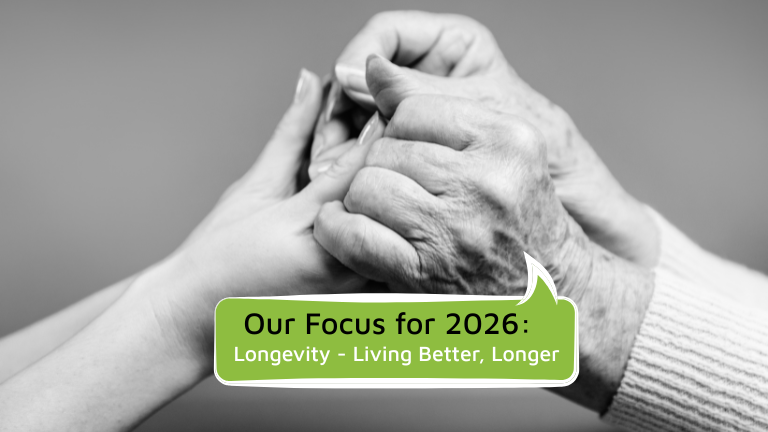
Longevity Starts From the Ground Up: The Foundations of Living Better, Longer
If you’ve ever thought,
“Why do I feel a little wobblier lately?”
or
“I’m still exercising… so why does my body feel different?”
You’re not imagining it.
Longevity isn’t about dramatic decline or sudden change. It’s about small, gradual shifts in strength, mobility and nervous system function that occur over time — often quietly.
At Pilates Connection in Lane Cove, our 2026 focus is simple:
Living better, longer.
Not chasing extremes.
Not training harder.
But understanding what truly supports independence, confidence and capability as the decades pass.
And it starts from the ground up.
1. The Ankle: The Overlooked Longevity Joint
Your ankle joint supports five to seven times your body weight every time you walk, climb stairs or change direction.
Yet it’s one of the most under-trained joints in the body.
The ankle isn’t just a hinge. It’s a complex structure made up of:
- The tibia and fibula (lower leg bones transferring load)
- The talus (central load distributor)
- Ligaments for stability
- Muscles and tendons for control and propulsion
- Sensory receptors (proprioceptors) sending constant feedback to the brain
As we age, three things commonly decline:
- Dorsiflexion (the ability to bend the ankle forward)
- Small stabilising muscle strength
- Proprioception (awareness of where your foot is in space)
This combination can lead to subtle instability — especially when stepping off a kerb or walking on uneven ground.
According to NSW Health and the Better Health Channel, around one in three Australians over 65 experiences a fall each year, with many falls occurring during everyday walking.
The key point?
This isn’t “just ageing”. It’s trainable.
2. Balance Is a Brain Skill — Not Just a Muscle Skill
Balance relies on communication between:
- Your visual system (eyes)
- The vestibular system (inner ear)
- Your joints and muscles
- The cerebellum and nervous system
Every small wobble is your brain processing information and adjusting in milliseconds.
As highlighted by Dementia Australia and Exercise & Sports Science Australia (ESSA), regular physical activity — particularly movement that challenges coordination and stability — is linked to better cognitive health and reduced falls risk.
If you wobble during balance work, that isn’t failure.
It’s neuroplasticity in action.
Longevity is as much about keeping the brain adaptable as it is about building muscle.
3. The Hips: The Load-Sharing Centre
Many people are surprised to learn that knee or lower back discomfort often originates in the hips.
The hips are a major force-transfer hub.
When deep stabilisers like gluteus medius and the deep rotators aren’t coordinating well, the load shifts into surrounding joints.
After 40, we naturally lose muscle mass (a process known as sarcopenia) unless we actively train it.
Sports Medicine Australia highlights the importance of hip strength in reducing lower limb injury risk and improving functional capacity.
Strong hips mean:
- Better walking mechanics
- Improved pelvic stability
- Reduced compensatory strain on knees and back
This isn’t aesthetic strength.
It’s structural longevity.
4. Posture, Breathing and Energy
Posture is often misunderstood.
It’s not about “standing up straight”.
It’s about how your spine manages load and how efficiently you breathe.
Forward head posture and stiff thoracic (mid-back) mobility can limit diaphragm function, reducing oxygen efficiency and increasing neck and shoulder strain.
The Australian Physiotherapy Association emphasises the importance of spinal mobility and load tolerance in long-term musculoskeletal health.
When breathing improves, so does:
- Energy
- Movement efficiency
- Nervous system regulation
- Stability
Good posture isn’t rigid.
It’s adaptable.
5. Getting Up From the Floor: A Marker of Independence
When was the last time you sat on the floor — and got back up without using your hands?
The ability to transition from floor to standing requires:
- Leg strength
- Hip mobility
- Balance
- Coordination
- Confidence
The Australian Institute of Health and Welfare consistently identifies mobility and falls prevention as key pillars of healthy ageing.
This isn’t about fitness trends.
It’s about maintaining capability for life.
6. Stress, the Nervous System and Ageing
Longevity isn’t just muscles and bones.
It’s your nervous system.
Chronic stress elevates cortisol, which can impact:
- Sleep
- Recovery
- Coordination
- Muscle retention
- Cognitive function
Australian mental health resources such as Beyond Blue and Head to Health emphasise the link between stress management and overall health outcomes.
Movement that combines breath, control and low-threat challenge supports nervous system regulation — helping the body feel safe, steady and responsive.
And that safety matters as we age.
It’s Never Too Early — Or Too Late
Whether you’re 35 and thinking long-term,
or 65 and wanting to feel steadier and stronger,
longevity is built through small, consistent foundations.
Mobility.
Balance.
Strength.
Bone health.
Brain health.
At Pilates Connection, we focus on building these foundations thoughtfully and progressively — helping you move well not just now, but for decades to come.
Because longevity isn’t about adding years to life.
It’s about adding life to your years.
Sorry, the comment form is closed at this time.